- All
- Product Name
- Product Keyword
- Product Model
- Product Summary
- Product Description
- Multi Field Search
 EnglishEnglish

Views: 222 Author: Enoch Publish Time: 2026-06-26 Origin: Site


Content Menu
● What Is a Pavilion and Why It Elevates Your Backyard
● Quick Overview: Hampton vs Traditional Pavilion at a Glance
>> Key Design Differences Table
● How Roof Pitch and Overhang Shape Your Outdoor Experience
>> Roof Overhang: Shade, Protection, and Space
● Columns, Headers, and Trim: How Style Translates into Perceived Luxury
>> Columns: 10″ Round vs 6×6 Square
>> Trim and Decorative Details
● Real‑World Use Cases: When to Choose Hampton vs Traditional
>> When a Hampton Pavilion Is the Better Fit
>> When a Traditional Pavilion Is the Better Fit
● Expert Design Tips: Matching Your Pavilion to Your Home and Climate
>> 1. Match Rooflines to Your Home
>> 2. Think About Sun Angles and Wind
>> 3. Plan for Future Features
● Practical Buying Checklist: 7 Steps Before You Decide
● Why Manufacturer Expertise and R&D Matter for Long‑Term Performance
● User Experience After Installation: What Owners Typically Notice
● Maintenance and Longevity: Getting the Most from Your Investment
● Clear Call to Action: How to Move from Idea to Finished Pavilion
● FAQs: Hampton vs Traditional Pavilion
When homeowners ask me how to turn a simple backyard into a resort‑style outdoor living space, I almost always start by talking about pavilions. Over the last 20+ years working with outdoor structures, I have seen two designs come up again and again in North America: the Hampton Pavilion and the Traditional Pavilion. They look similar at first glance, but key design details make them perform very differently in real backyards. [fabricdigital.co]
In this guide, I will walk you through the real‑world differences between Hampton vs Traditional pavilions, using both manufacturer specs and hands‑on experience from countless installations in the U.S., Canada, and Europe. By the end, you will know exactly which pavilion style fits your climate, architecture, and lifestyle—and how to avoid costly design mistakes. [fabricdigital.co]
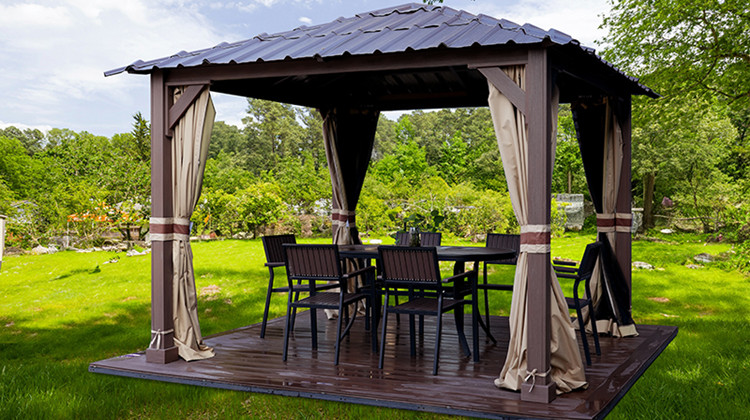
A pavilion is a permanent, open‑sided outdoor structure with a solid roof, designed to create a shaded, protected "room" in your yard. Compared with umbrellas or temporary canopies, a well‑built pavilion adds architectural presence, boosts property value, and can genuinely transform a basic lawn into a magazine‑worthy outdoor living area. [redfin]
Homeowners choose pavilions when they want:
- Reliable shade and rain protection for outdoor dining
- A fixed structure for kitchens, spas, or hot tubs
- A visual anchor that ties together patio, garden, and pool zones
- A more permanent, upscale look than tents or pop‑up pergolas [seed2d]
Among the many pavilion styles on the market, "Hampton" and "Traditional" have become popular reference designs because they balance classic proportions with practical engineering. [fabricdigital.co]
Before we dive into the details, here is a simplified comparison based on a leading U.S. pavilion manufacturer's product specifications. [fabricdigital.co]
| Feature | Hampton Pavilion | Traditional Pavilion |
|---|---|---|
| Roof pitch | Steeper, about 7.5/12 for a taller profile | Lower, about 6/12 for a simpler look |
| Roof overhang | Approx. 12″, deeper shade and larger roof | Approx. 6″, more compact roofline |
| Column style & size | 10″ round, larger, more elegant columns | 6×6 vinyl square posts, clean and simple |
| Header & bracing | Sweeping continuous arch braces | Shorter, simpler arch braces |
| Trim level | Additional trim and decorative dental moldings | Basic trim without extra detailing |
| Ceiling finish (standard) | Exposed wood with Mahogany stain | Exposed wood with Mahogany stain |
| Overall impression | Luxurious, resort‑style, highly decorative | Classic, understated, budget‑friendly |
Both designs can be customized, and many manufacturers—including long‑established producers in Guangzhou serving U.S., Canadian, and European markets—will adapt columns, trim, or roof details to match local building codes and homeowner preferences. [garrisoneverest]
From an engineering and usability standpoint, roof pitch and overhang are not just visual details—they directly affect comfort and durability. [redfin]
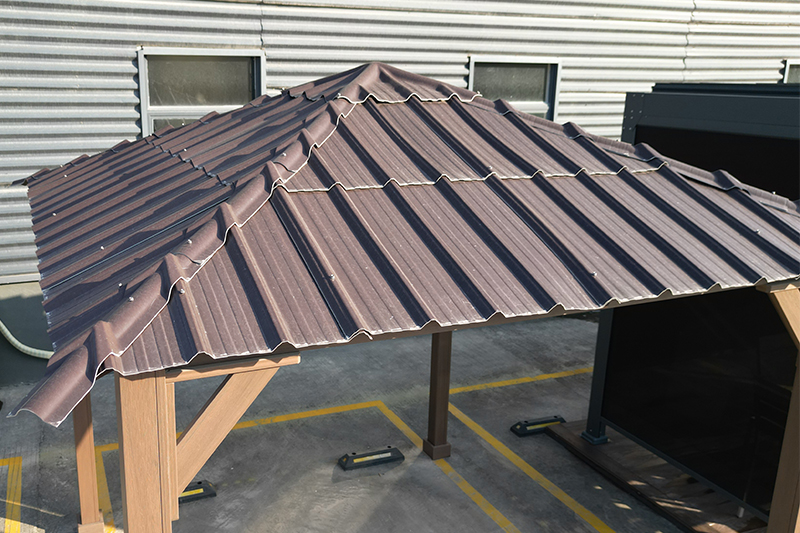
- Hampton Pavilion: A roof pitch of about 7.5/12 creates a taller, more dramatic roofline, which helps shed rain, snow, and debris more efficiently while also giving the pavilion a more "grand" presence. [fabricdigital.co]
- Traditional Pavilion: A 6/12 pitch is a little flatter, which keeps the structure visually lower and can blend better with single‑story homes or minimalist architecture. [fabricdigital.co]
From my project experience, steeper roofs are particularly appreciated in regions with heavier rainfall or snow, such as parts of Canada or the U.S. Northeast, because they reduce the risk of standing water and snow accumulation. [redfin]
- Hampton Pavilion: An overhang of approximately 12″ extends the roof footprint, delivering more shade and better protection to furniture, grills, and outdoor kitchens. [fabricdigital.co]
- Traditional Pavilion: With around a 6″ overhang, the Traditional design is more compact; it's ideal for smaller patios or tight urban yards where every centimeter counts. [fabricdigital.co]
In practice, the Hampton's deeper overhang allows you to place dining tables and lounge seating closer to the edges while still staying dry during light rain showers. [redfin]
When visitors walk into a backyard, they often notice the columns and trim before anything else. These elements carry most of the visual weight of a pavilion.
- Hampton Pavilion: Features 10″ round, larger columns that instantly read as more luxurious and traditionally "architectural." In my experience, they pair beautifully with upscale homes, stone patios, and formal landscaping. [fabricdigital.co]
- Traditional Pavilion: Uses 6×6 vinyl square posts, which deliver a clean, straightforward look with a slightly more contemporary edge. [fabricdigital.co]
If your home has strong classical elements—arches, crown moldings, columns at the front entry—the Hampton columns usually feel like a natural extension of that language. [fabricdigital.co]
- Hampton Pavilion: Includes a sweeping continuous arch brace, which visually softens the structure and adds a sense of flow and motion. [fabricdigital.co]
- Traditional Pavilion: Typically has shorter, simpler arch braces for a more restrained aesthetic. [fabricdigital.co]
These differences are subtle on a product page but surprisingly impactful in person: the Hampton's continuous arches make the pavilion feel more like a high‑end garden pavilion you'd see at a resort, while the Traditional reads closer to a solid, functional shelter for daily use. [lancastercountybackyard]
- Hampton Pavilion: Comes with additional trim and decorative dental moldings as standard, creating a refined, custom‑built impression. [fabricdigital.co]
- Traditional Pavilion: Offers basic trim, suitable for homeowners who prioritize clean lines and lower visual complexity. [fabricdigital.co]
Interestingly, many manufacturers allow you to order a Hampton without the decorative dental moldings or mix elements—for instance, Hampton roof and columns with simplified trim—if you want a hybrid between luxury and minimalism. [garrisoneverest]
From a buyer's point of view, the right choice often depends on how the pavilion will be used day‑to‑day and how it must relate to the existing house.
Choose a Hampton Pavilion if you:
- Want a resort‑style backyard with a strong visual focal point
- Plan to host weddings, formal dinners, or corporate events at home
- Live in a region with heavy rain or snow and want improved run‑off
- Prefer a more decorative, classic look with larger, rounded columns [seed2d]
In my consulting work, clients adding outdoor kitchens with built‑in grills, bar counters, and lighting typically gravitate to the Hampton, because the deeper overhang and richer detail match the investment level of the kitchen itself. [seed2d]
Choose a Traditional Pavilion if you:
- Have a smaller yard or narrow patio and want a more compact roofline
- Prefer a clean, simple aesthetic that doesn't overpower your home
- Are working with a tighter budget and want to maximize size over trim
- Need a structure that pairs with modern or transitional architecture [lancastercountybackyard]
Traditional pavilions are popular with young families who need robust, low‑maintenance shelter for play areas, hot tubs, or casual dining, without too much ornate detail. [lancastercountybackyard]
Beyond style labels, the best pavilion is the one that works for your specific climate, house, and lifestyle. Here are expert considerations I use when advising clients in different regions.
- If your home has a steep roof, dormers, or tall gables, a Hampton pavilion with a 7.5/12 pitch visually aligns better and feels integrated rather than "stuck on." [fabricdigital.co]
- If your home has a simple, low‑slope roof, a Traditional pavilion with a 6/12 pitch keeps the overall composition more balanced. [fabricdigital.co]
- In hot, sunny climates or west‑facing yards, the larger Hampton overhang can reduce glare and heat on late afternoons, especially over dining or seating areas. [redfin]
- In tighter spaces or where wind is a concern, a slimmer Traditional roof may experience less wind load, assuming all other engineering factors are equal (always follow local code and professional guidance). [redfin]
If you might later add:
- Outdoor curtains or privacy screens
- Integrated lighting and ceiling fans
- Heaters or audio systems
The more generous roof volume and detailing of a Hampton can give you more mounting options and a more polished final appearance. Traditional pavilions, however, are often easier to integrate with existing decks or balconies due to their simpler geometry. [adroll]
To avoid costly misalignments between expectation and reality, I recommend buyers go through this straightforward checklist before finalizing a pavilion order:
1. Confirm your primary use. Shade for dining, a hot tub shelter, an outdoor kitchen, or multi‑purpose entertaining all have slightly different requirements. [redfin]
2. Measure your hardscape. Carefully measure your patio, deck, or slab and compare it with the pavilion's post‑to‑post dimensions and roof overhang. [fabricdigital.co]
3. Study roof pitch and overhang. Look at side elevation drawings or photos; a 7.5/12 Hampton roof will change your sightlines more than a 6/12 Traditional roof. [fabricdigital.co]
4. Check column style against your architecture. Rounded vs square posts send very different style signals; stand at your back door and imagine the sightline. [fabricdigital.co]
5. Consider maintenance. Exposed wood ceilings with a Mahogany stain are beautiful but may require periodic maintenance depending on your local climate. [fabricdigital.co]
6. Discuss customization options. Many manufacturers can modify trim, moldings, and even structural details to better match your budget and local code. [garrisoneverest]
7. Review permit and snow‑load requirements. Especially in North America and Europe, ensure your pavilion's engineering meets local building standards. [garrisoneverest]
This process typically results in fewer surprises during installation and more satisfaction once the pavilion becomes a central part of daily life.
Not all pavilions are created equal, even if they share names like "Hampton" or "Traditional." Behind the scenes, experienced manufacturers invest heavily in R&D, structural testing, and material optimization to ensure their products perform consistently over decades. [garrisoneverest]
From a buyer's perspective, it is smart to prioritize manufacturers that:
- Have more than 20 years of production experience in outdoor structures
- Serve multiple demanding markets such as the U.S., Canada, and Europe
- Offer both standard models and customization services for special projects
- Provide clear documentation, installation guides, and after‑sales support [garrisoneverest]
These signals indicate not only stronger product quality but also a more mature understanding of load‑bearing requirements, corrosion protection, and colorfast finishes under diverse climates. [fabricdigital.co]
Based on homeowner feedback shared with leading outdoor‑living brands and installation partners, several patterns appear once a pavilion is installed. [lancastercountybackyard]
Most owners report that:
- Their pavilion quickly becomes the most used "room" in the home during warm months
- The structure significantly changes how often they host friends and family
- A well‑chosen style (Hampton or Traditional) feels "meant for the house" rather than an afterthought
- Quality details—like a Mahogany‑stained exposed wood ceiling—get frequent compliments from guests [lancastercountybackyard]
This emotional impact is important: when a pavilion is thoughtfully matched to the architecture and lifestyle, it doesn't just add shade; it adds a sense of place and identity to the whole property. [lancastercountybackyard]
To maintain performance and appearance, I recommend homeowners adopt a simple annual care routine, regardless of whether they choose a Hampton or Traditional pavilion.
- Inspect all visible fasteners and structural joints once a year.
- Clean the exposed wood ceiling and re‑seal or re‑stain if recommended by the manufacturer.
- Wash vinyl posts or columns with mild soap and water to keep them bright.
- Trim nearby trees to minimize leaf buildup and reduce long‑term moisture exposure. [redfin]
Manufacturers that have been in business for decades typically provide clear maintenance guidelines and may even offer matching touch‑up kits or replacement parts, which greatly simplifies long‑term ownership. [garrisoneverest]
If you are serious about upgrading your backyard with a Hampton or Traditional pavilion, the most effective next step is to move from inspiration to a concrete plan.
- Gather photos of your existing yard from multiple angles.
- Decide on your primary use (dining, lounge, kitchen, spa, or multi‑purpose).
- Note any site constraints such as slopes, existing patios, or nearby trees.
- Reach out to an experienced pavilion manufacturer or specialist dealer with this information.
Ask for a tailored proposal that compares at least one Hampton‑style and one Traditional‑style configuration for your space, including dimensions, materials, and estimated installation timelines. This side‑by‑side view often makes the best choice immediately obvious. [garrisoneverest]
1. Do Hampton pavilions always cost more than Traditional pavilions?
In most product lines, Hampton pavilions are priced higher because of larger columns, deeper overhangs, and more decorative trim, but actual pricing depends on size, materials, and customization. [garrisoneverest]
2. Can I remove the decorative dental moldings from a Hampton pavilion?
Yes, many manufacturers allow you to order a Hampton without decorative dental moldings or with simplified trim, which is helpful if you want the structural proportions of the Hampton but a slightly cleaner look. [garrisoneverest]
3. Are exposed wood ceilings with Mahogany stain difficult to maintain?
Not necessarily. They do require periodic cleaning and, in some climates, re‑sealing or re‑staining according to the manufacturer's maintenance schedule, but in return they provide a warm, high‑end appearance that many homeowners value. [redfin]
4. Which pavilion design is better for an outdoor kitchen?
In projects I have seen, Hampton‑style pavilions are often preferred for outdoor kitchens and bar areas because the deeper roof overhang and more generous interior volume offer better protection and more room for lighting, fans, and ventilation. [redfin]
5. How do I know what size pavilion to choose for my patio?
As a general rule, measure your usable hardscape area, subtract any clearance needed for walkways and doors, and then work with a manufacturer or dealer to choose a pavilion with appropriate post spacing and roof overhang so that seating, tables, and grills fit comfortably underneath. [adroll]
1. Country Lane Gazebos – “Hampton vs Traditional Pavilion: 5 Differences Between the Hampton and Traditional Pavilion.” https://www.gazebo.com/outdoor-living-blog/hampton-traditional-pavilion/
2. Fabric Digital – “SEO for Outdoor Furniture Brands: How to Rank and Sell More in a Competitive Market.” https://fabricdigital.co.nz/blog/seo-for-outdoor-furniture-brands-how-to-rank-and-sell-more-in-a-competitive-market
3. Garrison Everest – “Outdoor Industry SEO: 8 Ways To Rank Higher On Google.” https://www.garrisoneverest.com/seo/outdoor-industry-seo/
4. Redfin – “6 Tips for Creating the Ultimate Outdoor Living Space.” https://www.redfin.com/blog/tips-for-creating-the-ultimate-outdoor-living-space/
5. AdRoll – “Product Page SEO: How to Boost Rankings For Your Product Content.” https://www.adroll.com/blog/product-page-seo-how-to-boost-rankings-for-your-product-content
6. Lancaster County Backyard – “Top Outdoor Living Design Ideas and Blogs.” https://lancastercountybackyard.net/blog/outdoor-living-design/
7. Seed2D – “The Best Outdoor Living Upgrades for Summer Entertaining.” https://www.seed2d.com/post/the-best-outdoor-living-upgrades-for-summer-entertaining
8. Agentic SEO discussion – “How Do You Write Blogs That Actually Rank on Google?” https://www.reddit.com/r/Agentic_SEO/comments/1s40m51/how_do_you_write_blogs_that_actually_rank_on/
