- All
- Product Name
- Product Keyword
- Product Model
- Product Summary
- Product Description
- Multi Field Search
 EnglishEnglish

Views: 222 Author: Enoch Publish Time: 2026-06-15 Origin: Site


Content Menu
● What this pergola materials guide will help you do
● Why pergola material matters more than style
● Quick comparison: wood vs vinyl vs aluminum pergolas
● Wood pergolas: classic beauty with intensive care
>> Why people still love wood pergolas
>> The trade‑offs you must accept with wood
● Vinyl pergolas: low‑maintenance but limited flexibility
>> Where vinyl pergolas work well
>> Common complaints we hear about vinyl pergolas
● Aluminum pergolas: the modern standard for performance and design
>> Why aluminum pergolas are gaining market share
>> Key advantages of aluminum pergolas from a manufacturer's perspective
● Real‑world examples: matching pergola material to climate and use
>> 1. Coastal homes in the U.S. and Canada
>> 2. Humid, high‑rainfall climates
● how PS aluminum pergolas and garden rooms change the equation
● key questions to ask your pergola manufacturer before you buy
● step‑by‑step framework to choose your pergola material
● How we approach pergola projects as a 27‑year manufacturer
● Call to action: get a tailored pergola material recommendation for your project
● FAQs about aluminum, wood, and vinyl pergolas
When you invest in a pergola, you are not just buying shade—you are designing how you will live outdoors for the next 10–20 years or more. As a pergola manufacturer with 27 years of production, R&D, and export experience, I have seen the real‑world performance of wood, vinyl, and aluminum structures in the U.S., Canada, Europe, and Central America. [siteimprove]
In this guide, I will walk you through the pros and cons of aluminum vs wood vs vinyl pergolas, share on‑site lessons from projects in different climates, and give you a simple decision framework so you can choose the best pergola material for your space.
By the end of this article, you will be able to:
- Understand how wood, vinyl, and aluminum perform in real outdoor projects. [siteimprove]
- Match pergola material to climate, maintenance preference, and budget. [siteimprove]
- Avoid the most common buyer regrets I hear from homeowners and contractors after 3–5 years of use.
- Ask manufacturers the right technical questions before you sign any contract.
Most buyers start with color and style. But material quietly determines:
- Lifespan: How many years before major repair or replacement.
- Maintenance load: How much time and money you spend every year.
- Structural safety: Especially under wind, rain, snow, and UV exposure. [siteimprove]
- Total cost of ownership: Purchase price plus coatings, cleaning, and part replacements.
Global market data shows pergolas are growing into a multi‑billion‑dollar segment, driven by demand for outdoor living and home improvement. In this environment, choosing the right pergola material is not only an aesthetic decision; it is an investment choice. [siteimprove]
| Factor | Wood Pergola | Vinyl Pergola | Aluminum Pergola |
|---|---|---|---|
| Visual style | Warm, natural, classic (siteimprove) | Clean, modern, often white | Sleek, contemporary, architectural (siteimprove) |
| Lifespan (typical) | 10–20+ years with heavy maintenance (siteimprove) | 15–20 years with light maintenance | 20+ years with minimal maintenance, especially with powder coating (siteimprove) |
| Maintenance | High: staining, sealing, repairs (siteimprove) | Low: occasional washing | Very low: periodic cleaning (siteimprove) |
| Weather resistance | Can rot, warp, crack without care (siteimprove) | Moisture‑proof but may become brittle in extreme cold | Strong resistance to corrosion, ideal for coastal and high‑UV regions (siteimprove) |
| Structural strength | Strong but heavy; load needs careful design | Adequate for standard residential spans | High strength‑to‑weight ratio, ideal for large spans and modern designs (siteimprove) |
| Customization | Easy to cut, shape, and repaint on site | Limited to factory profiles and colors | Highly flexible with modular profiles, motorization, smart add‑ons (siteimprove) |
| Best fit | Natural gardens, rustic patios | Low‑maintenance suburban backyards | Modern villas, rooftops, coastal homes, hotels, restaurants (siteimprove) |
After visiting hundreds of installed projects, I can confirm that well‑designed wood pergolas are still visually unmatched in certain landscapes. Homeowners who choose wood typically care about: [siteimprove]
- Natural grain and warm color tone.
- Easy on‑site customization for special shapes or sizes.
- The ability to re‑stain or repaint when they want a new look.
High‑quality pressure‑treated pine and cedar can provide strong structural support and a timeless feel, especially when integrated into traditional gardens or classic architecture. [siteimprove]
However, wood comes with non‑negotiable obligations:
- Annual or bi‑annual staining and sealing to fight moisture and UV.
- Regular inspection for rot, cracking, and insect damage. [siteimprove]
- Possible warping or twisting in regions with strong sun and humidity swings.
In humid or coastal climates, we often see early surface deterioration if owners underestimate maintenance. In one coastal project we were consulted on (not our product), the cedar pergola showed visible discoloration and surface cracking after only three years because protective coatings were not maintained.
If you choose wood, you should be the kind of owner who enjoys maintenance or has a reliable contractor on schedule.
Vinyl pergolas became popular because they offer a clean, bright appearance with minimal maintenance. Owners who choose vinyl usually want:
- A white or light‑colored pergola that stays consistent over time.
- Very little yearly upkeep beyond washing.
- A familiar, residential look that matches siding and trim.
In many suburban backyards in North America, vinyl pergolas sit comfortably above decks, hot tubs, or pools, delivering shade without asking for much attention. [siteimprove]
From homeowner feedback and installer comments, some recurring issues appear:
- Limited color options; repainting is usually not recommended.
- Scratches and marks can be highly visible on smooth surfaces.
- In very hot climates, expansion and surface temperature can become noticeable.
Structurally, vinyl is suitable for small to medium‑sized residential spans, but it is not the best candidate when you need long, heavy‑duty beams, integrated glazing, or motorized louvers.
Market research shows that aluminum is one of the key growth materials in the global pergola sector, especially for high‑end and smart outdoor structures. From our own export projects, we see aluminum selected more often when: [siteimprove]
- Climate is coastal, humid, or high‑UV.
- The client requests large spans or roof integration with glass or polycarbonate.
- There is demand for motorized louvers, retractable roofs, LED lighting, or smart controls. [siteimprove]
Aluminum's natural resistance to rust and corrosion, combined with modern powder‑coating technology, gives it a rare combination of durability and design freedom. [siteimprove]
Based on 27 years of production experience and project feedback, these are the advantages that matter most:
- Minimal maintenance: No staining, no sealing; routine cleaning with mild detergent is typically enough. [siteimprove]
- Strong strength‑to‑weight ratio: Safer long spans with less bulk, perfect for rooftops and decks where load is critical. [siteimprove]
- Excellent weather resistance: Properly coated aluminum withstands UV, rain, and coastal conditions without rotting or rusting. [siteimprove]
- High design flexibility: Compatible with louvers, glass roofs, shading fabrics, heaters, and integrated lighting. [siteimprove]
In many markets, we see aluminum pergolas becoming the default for modern hotels, restaurants, and luxury residential verandas because they align with both aesthetic and operational needs.
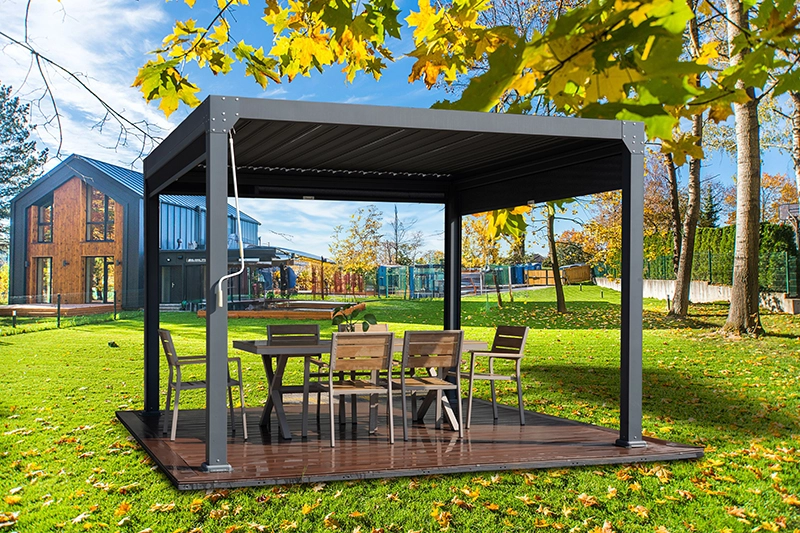
To make this more practical, here is how we typically advise distributors and homeowners in different regions based on actual project experience.
- Environment: Salt air, strong UV, and frequent storms.
- Risk: Accelerated corrosion and coating breakdown for low‑quality metal; rot for untreated wood. [siteimprove]
- Recommended: Aluminum pergolas with marine‑grade powder coating, stainless fasteners, and integrated drainage to manage heavy rain.
In coastal regions, we rarely recommend standard wood pergolas unless the owner is fully committed to intensive maintenance.
- Environment: Long rainy seasons, high humidity, mold growth risks.
- Risk: Rot, mold, and paint failure on wood; staining or algae growth on uncleaned surfaces. [siteimprove]
- Recommended: Aluminum or vinyl with good surface finish; avoid untreated wood.
For garden rooms or PS aluminum pergolas with glass roofs, we also reinforce drainage systems and sealing details to avoid leaks.
- Environment: Strong sun, big day–night temperature swings.
- Risk: Wood drying, cracking, and fading; vinyl expansion and surface heating. [siteimprove]
- Recommended: Aluminum with UV‑stable coating, or high‑quality, well‑protected wood for clients who love the natural look.
In these projects, we pay special attention to thermal expansion gaps and color selection (darker colors can run hotter to the touch).
Traditional pergola material guides often stop at wood, vinyl, and basic aluminum. They rarely address PS (polystyrene) insulated roof panels, integrated garden rooms, or smart pergola systems that combine shade, thermal insulation, and rain protection. [siteimprove]
From our manufacturing and R&D work with PS pergolas and garden rooms, here is how these systems add value:
- Better thermal comfort: PS‑insulated roof panels can significantly reduce heat gain, making outdoor rooms usable even in hot seasons.
- All‑weather usability: When combined with glass or polycarbonate side walls, a PS pergola transitions from a shade structure into a true garden room.
- Cleaner integration: Structural aluminum profiles hide wiring for lighting, fans, and heaters, enhancing both safety and aesthetics.
For homeowners comparing "pergola vs enclosed garden room", PS aluminum systems sit in the middle: more flexible and open than a permanent extension, but much more functional than a simple open‑slat pergola.
To avoid costly mistakes, I recommend asking any potential supplier these critical questions before you place an order:
1. What is the aluminum alloy, thickness, and surface treatment?
Look for clear answers on alloy grade and powder‑coating specifications, especially if you are in a harsh climate. [siteimprove]
2. How is water managed?
Good systems integrate hidden gutters and downpipes to direct water away from your deck and foundations.
3. What wind and snow load has the design been tested for?
For U.S., Canadian, and European projects, ensure the pergola can handle local code requirements.
4. What is included in the warranty and what is excluded?
Clarify coverage for coating, structure, and accessories like motors or LEDs.
5. Can the system be customized or extended later?
Modular aluminum designs allow you to start with a pergola and later add screens, glass walls, or roof upgrades.
As a manufacturer, we welcome detailed technical questions; suppliers who cannot explain these basics may not be ready for demanding projects.
If you feel overwhelmed, use this simple 5‑step checklist:
1. Define your primary goal
Is it shade only, or do you want an outdoor room you can use in three or four seasons?
2. Map your climate challenges
List your main issues: salt, humidity, snow, strong sun, or high wind.
3. Decide your maintenance tolerance
- If you want near‑zero maintenance, aluminum or vinyl will fit better.
- If you accept annual work for a natural look, wood can still be an option.
4. Set a realistic total budget
Consider not just purchase price but 10‑year maintenance cost.
5. Talk to at least one manufacturer or specialist
Share photos, dimensions, and climate details. A good manufacturer should return a material recommendation plus design proposal, not just a price.
Following this sequence usually makes the "aluminum vs wood vs vinyl" decision much clearer.
As Guangzhou Enoch, we specialize in PS pergolas and garden rooms, serving partners and buyers in the United States, Canada, Europe, Central America, and other global markets. Our process typically includes: [siteimprove]
- Technical consultation based on local climate and building practices.
- Material and structure design that balances aesthetics, load performance, and installation efficiency.
- Support with custom colors, dimensions, and integration with existing buildings or outdoor landscapes.
We have seen projects fail when material choice is made only on price or pictures. Our goal—whether you choose wood, vinyl, or aluminum—is to help you build an outdoor space that stays safe, beautiful, and usable for years.
If you are currently comparing aluminum vs wood vs vinyl pergolas and are not sure which is right for your site, you do not need to guess alone.
Share your location, photos, and basic measurements, and our engineering team can provide a material recommendation and preliminary design suggestion based on 27 years of manufacturing experience and cross‑regional project data. This way, you can invest in a pergola—or a full PS garden room—that truly fits your climate, lifestyle, and budget.

1. Is an aluminum pergola worth the higher upfront cost?
For most climates, yes. Aluminum pergolas typically offer longer service life and much lower maintenance cost compared with wood, especially in coastal or humid regions. When you spread investment over 10–20 years, the total cost of ownership is usually competitive. [siteimprove]
2. Will an aluminum pergola get too hot in the sun?
Any dark‑colored outdoor structure can heat up in direct sun, but aluminum with quality powder coating manages temperature better and resists UV damage over time. Choosing lighter colors and integrating shading fabrics or insulation can further improve comfort. [siteimprove]
3. Can I install a pergola on a rooftop or balcony?
Yes, but weight and wind load are critical. Because aluminum offers high strength with low weight, it is often the preferred material for rooftop and deck installations, provided that a structural engineer confirms load capacity. [siteimprove]
4. How often do wood pergolas really need maintenance?
In moderate climates, most wood pergolas need staining or sealing every 1–2 years, plus periodic inspection for rot, cracking, or insect damage. In harsh or coastal climates, more frequent attention may be required. [siteimprove]
5. Is a vinyl pergola a good choice near the ocean?
Vinyl handles moisture well but may not match aluminum's long‑term performance in salty, high‑UV environments. Many coastal projects now favor aluminum for structural parts, sometimes combined with fabrics or glass. [siteimprove]
1. Country Lane Gazebos, "Pergola Materials Guide: Wood, Vinyl & Aluminum."
[https://www.gazebo.com/outdoor-living-blog/pergola-materials-guide/]
2. Coherent Market Insights, "Pergolas Market Size, Opportunities, & YoY Growth Rate, 2033."
[https://www.coherentmarketinsights.com/industry-reports/pergolas-market] [siteimprove]
3. Google Search Central, "SEO Starter Guide: The Basics."
[https://developers.google.com/search/docs/fundamentals/seo-starter-guide] [developers.google]
4. Google Search Central, "Creating Helpful, Reliable, People‑First Content."
[https://developers.google.com/search/docs/fundamentals/creating-helpful-content] [developers.google]
5. Apex Growth, "The Ultimate Guide to Building Your SEO & Content Strategy (2024)."
[https://www.apexgrowth.co/case-study-project/ultimate-guide-to-seo-content-strategy] [apexgrowth]
