- All
- Product Name
- Product Keyword
- Product Model
- Product Summary
- Product Description
- Multi Field Search
 EnglishEnglish

Views: 222 Author: Hazel Publish Time: 2025-03-13 Origin: Site


Content Menu
● Introduction to Planting Around Pavilions and Gazebos
● Strategies for Planting Around Pavilions and Gazebos
>> 1. Climbing Plants for Texture and Privacy
>> 2. Flowering Shrubs for Color and Interest
>> 3. Raised Beds for Small Plants
>> 4. Potted Plants and Hanging Baskets
>> 5. Water Features for Serenity
● Design Ideas for Different Styles
● FAQs
>> 1. What are the best climbing plants for a gazebo?
>> 2. How do I maintain climbing plants on a gazebo?
>> 3. What type of plants should I use for a tropical gazebo?
>> 4. Can I use raised beds around a gazebo?
>> 5. How can I incorporate a water feature near my gazebo?
Planting around a pavilion or gazebo is an art that requires careful consideration of several factors, including the style of the structure, the surrounding landscape, and the desired aesthetic. Whether you're aiming for a lush, natural look or a more formal garden setting, the right plants can transform your outdoor space into a serene oasis. In this article, we'll explore various tips and ideas for planting around a pavilion or gazebo, including the use of climbing plants, flowering shrubs, and strategic landscaping techniques.
Pavilions and gazebos are beautiful additions to any garden, providing a cozy retreat from the sun and a focal point for outdoor gatherings. However, without thoughtful landscaping, these structures can appear isolated or out of place. By incorporating plants that complement the style and architecture of your pavilion or gazebo, you can create a harmonious and inviting space that blends seamlessly into its surroundings.
When selecting plants for around your pavilion or gazebo, consider the following factors:
- Plant Height: Tall shrubs or grasses can obscure railings or borders, while smaller perennials add color without obstructing views.
- Sunlight and Shade: Ensure that the plants you choose are suitable for the amount of sunlight your pavilion receives.
- Climbing Plants: Vines like clematis, honeysuckle, or English ivy can add texture and privacy to your structure.
- Soil Conditions: Choose plants that thrive in your local soil type, whether it's clay, sand, or loam.
Climbing plants are an excellent choice for adorning pavilions and gazebos. They not only provide natural shade and privacy but also add a dynamic layer of texture and color to the structure. Plants like clematis, bougainvillea, and jasmine are popular options due to their vibrant blooms and ease of maintenance.
Flowering shrubs such as mockorange or hydrangeas can create a beautiful backdrop for your pavilion. These plants offer seasonal interest with their blooms and foliage, ensuring your garden remains vibrant throughout the year.
For a more structured look, consider installing raised beds around your pavilion. These are ideal for small perennials or annuals, allowing you to change the color scheme seasonally. Raised beds also provide good drainage and require minimal maintenance.
Potted plants and hanging baskets are versatile options for adding color and texture without obstructing views. They can be easily moved or replaced to match different seasons or themes.
Integrating a small water feature, such as a fountain or pond, near your pavilion can create a peaceful ambiance. Aquatic plants and the soothing sound of water enhance the tranquility of your outdoor space.
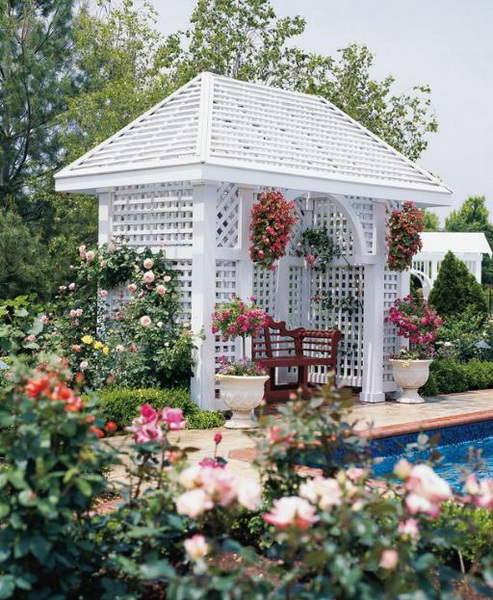
Inspired by traditional Victorian architecture, this style features intricate details and often a painted finish. Surrounding it with formal plant beds and lush greenery creates a charming oasis. Consider using boxwood hedges or lavender for a classic look.
For a more contemporary look, use a patio gazebo as a focal point for outdoor dining or entertainment. Container plants and a fire pit can add warmth and coziness to the space. Succulents or grasses are great options for a modern aesthetic.
Incorporate palm trees or tropical-inspired supports to give your gazebo a beachy vibe. This style is perfect for warm climates and can be complemented with vibrant flowering plants like hibiscus or plumeria.
Maintaining your plants around a pavilion or gazebo involves regular pruning, watering, and fertilizing. Here are some tips to keep your garden thriving:
- Pruning: Regularly prune climbing vines and shrubs to maintain shape and promote healthy growth.
- Watering: Ensure plants receive adequate moisture, especially during hot summer months. Avoid overwatering, which can lead to root rot.
- Fertilizing: Use a balanced fertilizer to promote blooming and foliage health. Organic options like compost can also enrich the soil without harming the environment.
In the spring, focus on planting bulbs like tulips or daffodils around your pavilion. These will bloom early and add vibrant color to your garden. Consider using spring-flowering shrubs like azaleas or rhododendrons for a stunning display.
During the summer, incorporate heat-tolerant plants like succulents or zinnias. These will thrive in warm weather and provide continuous color throughout the season. Hanging baskets filled with petunias or geraniums can add a pop of color.
In the fall, plant perennials like asters or sedum, which will bloom late in the season and provide interest during the cooler months. Consider adding fall foliage plants like maple trees or burning bush for a dramatic display of color.
For winter interest, use evergreen shrubs like boxwood or holly. These will maintain their foliage year-round and provide structure to your garden during the colder months. Incorporate winter-flowering plants like camellias or winter jasmine for a touch of color.
Theme gardens can add an extra layer of charm to your pavilion or gazebo. Here are a few ideas:
- Herb Garden: Plant herbs like rosemary, thyme, or basil around your pavilion. This creates a fragrant and functional garden perfect for cooking enthusiasts.
- Butterfly Garden: Incorporate plants that attract butterflies, such as milkweed or lantana, to create a vibrant and lively space.
- Moon Garden: Use plants with white or pale flowers, like moonflowers or evening primrose, to create a magical ambiance in the evening.
Planting around a pavilion or gazebo is a creative process that can transform your outdoor space into a beautiful retreat. By choosing the right plants, considering sunlight and soil conditions, and incorporating climbing vines or flowering shrubs, you can create a harmonious and inviting environment. Whether you prefer a lush, natural look or a more formal garden setting, thoughtful landscaping can elevate your pavilion or gazebo into a stunning focal point of your garden.
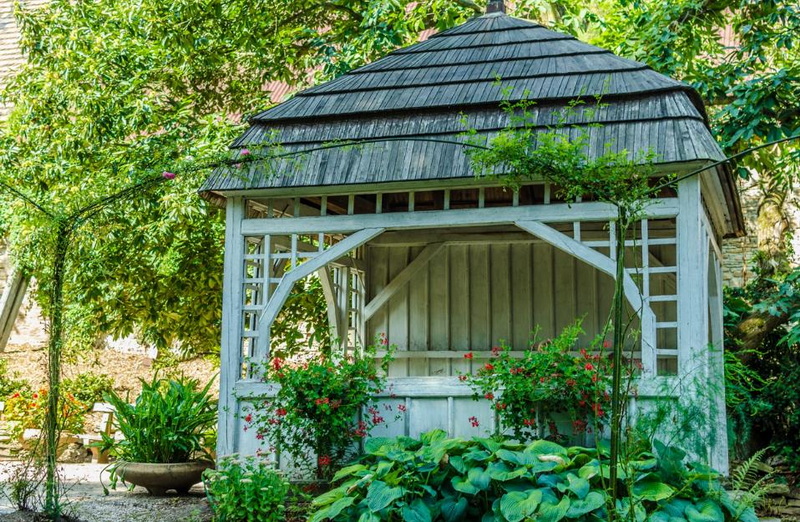
Climbing plants like clematis, honeysuckle, and English ivy are excellent choices for gazebos. They provide natural shade, privacy, and add texture and color to the structure.
Regular pruning is essential to maintain the shape and promote healthy growth of climbing plants. Prune them back in early spring to encourage new blooms and prevent overgrowth.
For a tropical gazebo, use plants with a beachy vibe, such as palm trees or flowering plants like hibiscus or plumeria. These plants thrive in warm climates and add a vibrant touch to your outdoor space.
Yes, raised beds are a great option for planting around a gazebo. They provide good drainage, require minimal maintenance, and can be used for small perennials or annuals.
A small water feature like a fountain or pond can be placed near your gazebo to create a peaceful ambiance. Ensure the water feature is safely positioned and well-maintained to prevent algae buildup.
